
Trace Former Roane County Property Owners
Start with the newest recorded deed, not a family story or an old tax note. Every deed supplies a grantor, grantee, date, and description. Those details point to the earlier transfer. Roane County's official index page lists its deed categories. But it never states the earliest year available online. Treat the statutory land-book dates as a separate historical source. That source is not proof of deed-index coverage.
| Source | Years It Covers | Where Held | What It Shows |
|---|---|---|---|
| WV Land Records index | Earliest online year not stated | Roane County Clerk | Listed deed and land-instrument categories |
| Roane land books | 1856 to 1861 listed by statute | State code reference and historic books | Land-book lead, not deed-image coverage |
| Parent-county records | Before Roane County was formed in 1856 | Kanawha, Jackson, or Gilmer records | Possible earlier county filing path |
| Courthouse books, microfilm, archives | Coverage must be confirmed | County Clerk or WV Archives & History | Older or unindexed material and cross-checks |
Start with the newest deed. Ask the Clerk what years are indexed online. Anything before 1856 may lead into a parent county. The 1856 to 1861 land-book dates are a useful lead, but they say nothing about when the deed index begins. Keep the source type straight.
The County Clerk's Roane land-record category page confirms the local instrument groups. The image on that landing page shows categories only, not deed results or index dates.
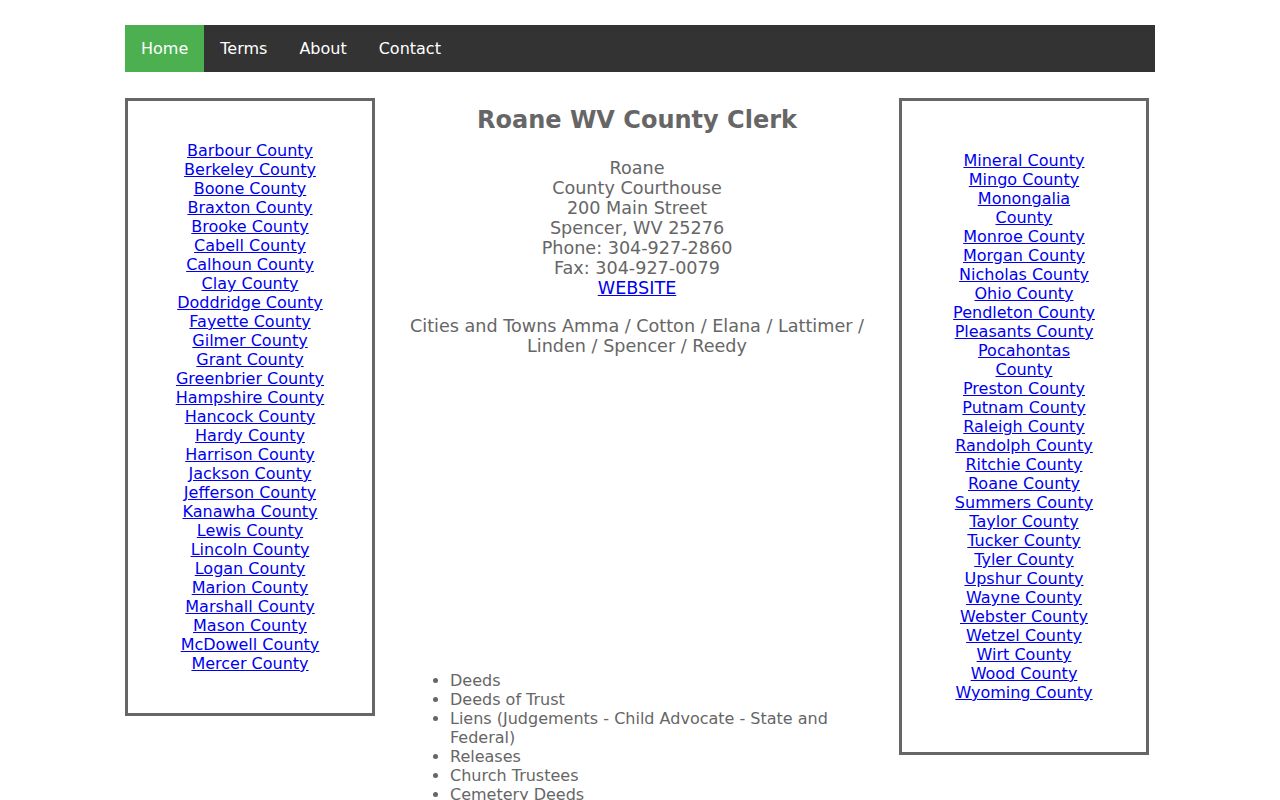
Use the categories to frame the search. The Clerk can confirm which record years and volumes are actually available.
Roane County Courthouse Fires and Missing Links
Roane's first two courthouses burned. The fires destroyed the records inside, per the state court-history account. A missing volume can explain a gap without proving the land never changed hands. That matters for any chain search. Roane was formed in 1856 from Kanawha, Jackson, and Gilmer counties. Earlier deeds may sit under a parent county instead.
Write down the names, dates, and sources already checked. Ask the Clerk about surviving deed books too. Tax books, probate, court orders, parent-county indexes, state archives, newspapers, and later corrective deeds each add a possible clue. Only the recorded instrument or court order shows its own legal effect. A gap stays labeled a gap.
Roane County Land Books and the Deed Index
W. Va. Code §37-10-1 lists Roane land books for 1856 through 1861. Those dates anchor land-book research. They promise no matching deed books, plats, or images. Online grantor-grantee entries are not guaranteed either. Do not claim the index starts in 1856 unless the Clerk confirms it.
Land books track assessment clues; deeds record conveyances. They answer different questions. If the index stops, ask where the book is held and what details identify the parcel. A pre-1856 transfer may sit in the parent county. The 1856 shift into the new West Virginia county system can also change how a name or land description is filed.
The statutory land-book table is the source for this limited range.
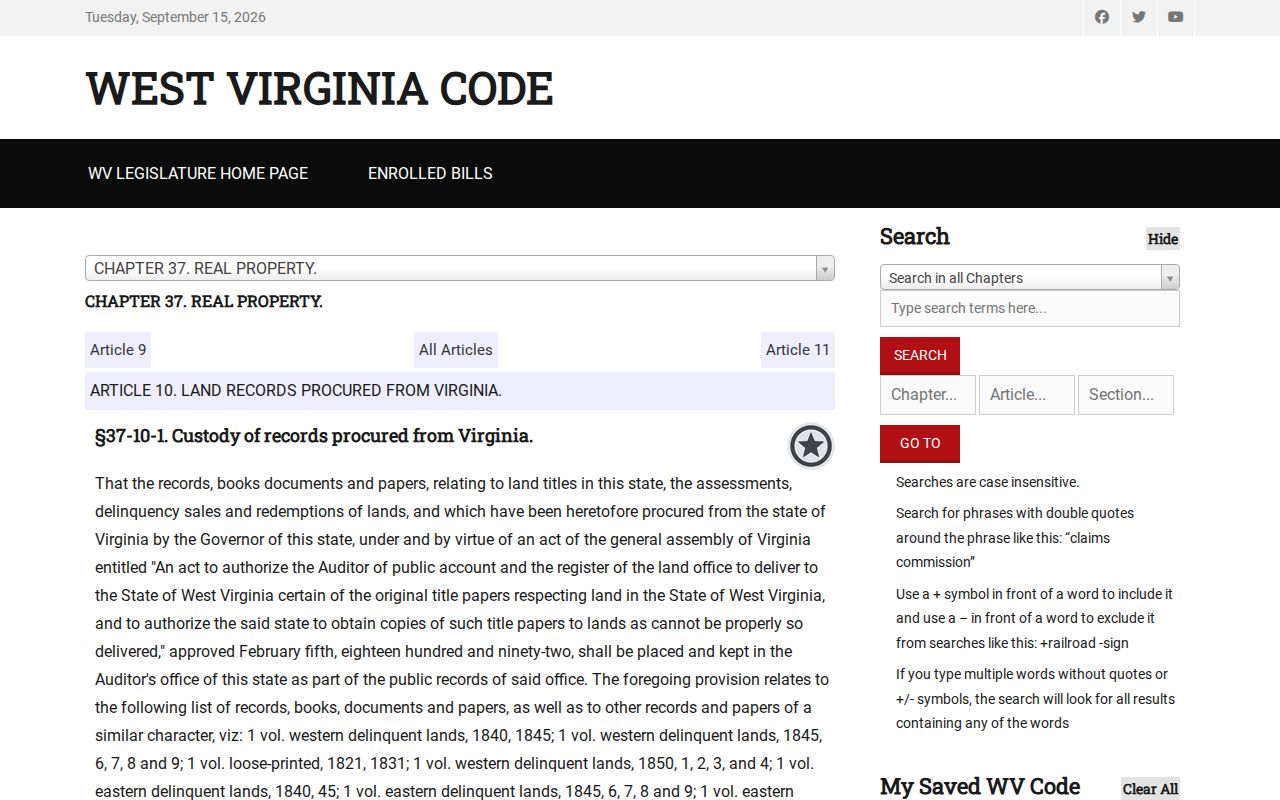
The image backs a land-book lead only; confirm deed-index coverage with the County Clerk.
Walk the Roane County Chain Backward
Walk the chain one deed at a time. The grantee on the newest deed becomes the prior name you search next. Names repeat in Roane County. Boundaries shift too. Match every deed to the parcel by its legal description before trusting a name alone. Because the online search fields were not shown on the Roane landing page, confirm with the Clerk how the index is queried before relying on one name result.
- Find the latest deed using the current owner as grantee and copy its legal description.
- Read the grantor name and search that person or entity as a prior grantee.
- Compare the parcel description, date, and instrument category before adding the earlier deed to the chain.
- Repeat backward; if the online index ends, ask the Clerk about books, microfilm, and archives.
- Grantor
- The party conveying the interest.
- Grantee
- The party receiving the interest.
- Chain of title
- The ordered sequence of recorded transfers for the same land.
- Legal description
- The written description used to identify the land, which can outlast a street name.
Old Spencer Names in Roane Deeds
Spencer was not always Spencer. Before its 1858 founding and charter, the town went by Tanner's Cross Roads. It was also called Cassville and New California. An old deed may instead name a road, creek, district, or lot. So may a court file or newspaper notice. Reedy records can be just as tricky. They may cite the Ravenswood-Reedy Turnpike or the Reedy-Spencer Road.
Anchor with the present parcel ID and deed description. Then try the historic road and place names. A former name explains why a modern city search misses a document. But it proves nothing about a specific parcel. Match by legal description, deed reference, or a reliable land identifier.
Roane Estate Transfers and Former Owners
An estate transfer reshapes the name trail in Roane County property records. The decedent can stay on the tax roll while probate is pending. Later, the instrument may name an executor, an administrator, a trust, or an heir instead. Trace the former owner through probate and land records. Then read the order or deed that moved the interest. A death certificate helps with identity and timing. It is not a title document, though. West Virginia Archives & History serves as the state genealogy referral. It covers county court documents, newspapers, census material, and older vital records. Roane County publishes no online probate index. It offers no dedicated finding aid either. Ask the Clerk and the archive staff which volume covers your name and period. Keep genealogy clues and legal proof separate from each other.
Roane Plats and Older Parcel Descriptions
The County Clerk's land-record list includes plat maps. A plat ties lot numbers, roads, and easements to a deed. It cannot carry a complete chain of title by itself. When a former owner's deed cites a lot or subdivision reference, ask the Clerk for the matching plat. Then compare that lot description against current parcel geometry in the GIS map. Roane County offers no named subdivision list. There is no plat-book page range, and no street-renumbering project to lean on. Do not guess a neighborhood name from a landmark. A plat and a GIS map can still orient an older parcel. The transfer itself stays in the deed record. Reconciling old lines to present ground features may call for a survey.
Requesting Older Roane County Volumes
An online index sometimes gives no usable year or name. When that happens, contact the County Clerk about courthouse books, microfilm, or alternate holding places. West Virginia FOIA supports a focused inspection or copy request to a public custodian. Describe the county and the parties. Include a date range, the record type, and any parcel or book references. The law sets a response deadline. It does not list Roane-specific copy or certification prices. A failed online search does not prove a deed is missing. Ask whether the name was indexed under a different form. Ask whether the document sits in another record category. Or ask whether an older volume survived the courthouse fires. If a request is denied, the public body must state its reasons. It must also provide court-review information under the statute. See West Virginia FOIA for the request and reproduction-cost rule.
How Far Back Roane Ownership Can Be Traced
No online cutoff year exists for the Roane County deed index. The statutory land-book range runs from 1856 through 1861. That fact does not define the deed index. Before Roane's 1856 creation, search Kanawha, Jackson, or Gilmer records. The legal description and timing will tell you which. The courthouse fires may leave a real gap in the local chain. For a later chain, work through each recorded grantor and grantee. Note the source and document reference. For an earlier chain, rely on the Clerk, courthouse volumes, and the state archive. Add parent-county records and supporting tax or probate material. Be precise about what is proven and what is only a lead. Former owner research in Roane County property records holds up best. Every link must tie to the same land description.
Lawful use. Former-owner research in Roane County can support house history, estate work, and property due diligence. Do not use it to track, threaten, harass, or harm any living person. A deed chain is not a title opinion.